
In the press
Mission Darkness Faraday Tents Make the Cover of Digital Forensics Magazine
Issue 59 opens with “The End of the Expensive SCIF?”, a lead feature on how portable Faraday workspaces are putting RF-isolated forensic labs within reach of far more agencies.


We’re excited to see Mission Darkness™ Faraday tents on the cover of Digital Forensics Magazine’s Issue 59.
The lead feature, written by Damian Gover, asks a question many forensic units have been quietly asking for years. If a shielded room is the gold standard for examining seized devices, what happens to the agencies that can’t build one?
The article’s answer is room-scale Faraday enclosures. Walk-in tents that started life as field equipment are now being installed inside existing offices and labs as permanent forensic infrastructure, giving investigators an RF-isolated space large enough to actually work inside.
Why it matters
Custody is not control. A seized phone is still a radio.
Bagging, tagging, and logging a device puts it in physical custody. It doesn’t stop the device from listening. Cellular, Wi-Fi, Bluetooth, and cloud services keep searching for a connection, and anyone on the other end may still be able to sync accounts, change a passcode, or trigger a remote wipe before an examiner ever connects a cable.
The feature points to the FBI’s Phantom Secure case, where encrypted phones sold to criminal networks shipped with remote wipe built in as a selling point. With eSIMs and always-on background services, pulling the SIM card is no longer a reliable fix.
A shielded workspace closes that gap. It protects evidence from remote interference while giving investigators room to work, manage multiple devices at once, and run examinations that last days or weeks.
The shielding toolkit
Bags, Boxes, Tents, and Rooms
The article lays out four formats, each matched to a different job. Its point isn’t to replace any of them. It’s that most agencies were missing the third.
-
Transport
Faraday Bags
Immediate containment from the moment of seizure and safe transport back to the lab.
-
Brief interaction
Tabletop Boxes
Quick triage and short examinations through a shielded glove interface.
-
The missing layer
Faraday Tents
A walk-in workspace for extended, ergonomic examination without a construction project.
-
Specialized fixed sites
Shielded Rooms
Permanent, purpose-built facilities for classified or high-throughput operations.
For teams facing space and budget constraints, portable enclosures add RF-isolated capacity inside existing facilities, and they can move with you if your facility changes. Explore Faraday tents or see how they compare in forensic enclosures.
Once investigators work inside a properly engineered tent, they find it difficult to go back to reaching through a glove box for anything beyond a quick check.Ryan Judy, CEO, MOS Equipment
As quoted in the feature, teams are using tents for everything from initial triage and live extractions to long-term passcode processing, with dozens of devices charging and running at once.
From shelter to workspace
What Turns a Tent into a Forensic Room
The feature describes the design details that let investigators stay inside comfortably for hours. Every CYPHERCYLENT™ tent is built around them.
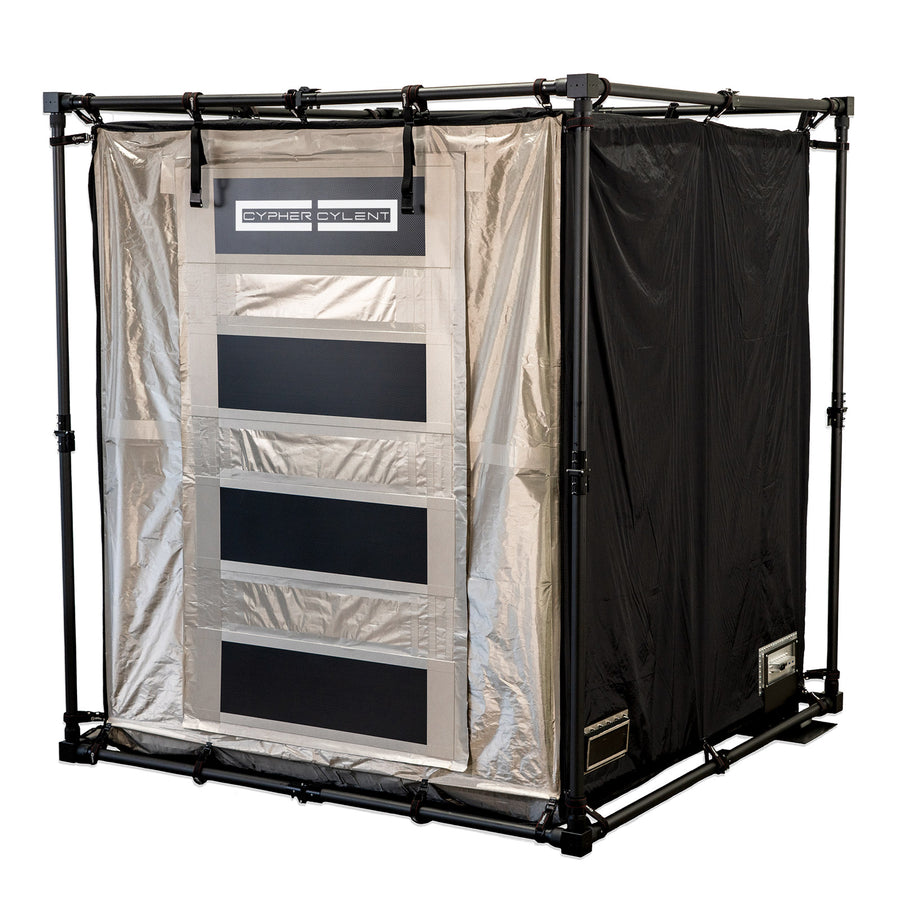
A Rigid, Square Frame
A carbon fiber frame holds the shell upright and square, so shelving, racks, and workstations go in just like they would in an office.
CYPHERCYLENT Faraday Tent
An RF Airlock at the Door
A vestibule works like an airlock. Step in, close the outer door, then open the inner one, keeping the main workspace sealed during entry and exit.
Tent with VestibuleFiltered Power and Data
Shielded filter panels pass power, Ethernet, and USB through the wall so extraction tools, chargers, and monitors run without opening a gap in the shield.
Configure in a custom quote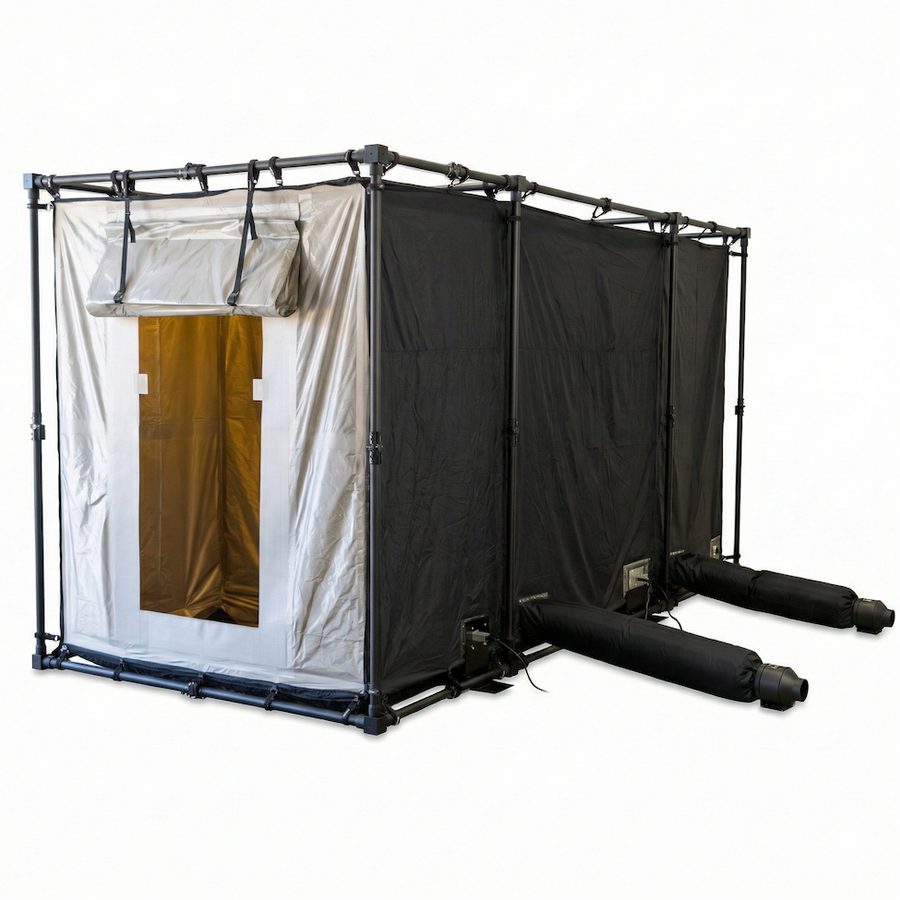
Multi-Chamber Workflows
Separate zones for intake, active analysis, and long-term storage let devices move through the whole case without leaving a shielded space.
Triple Chamber Operations TentTreat the Shield Like the Chain of Custody
One takeaway from the feature worth repeating. Validate shielding performance after installation, after any relocation, and after any repair or reconfiguration, and document door procedures and device movement along the way. An RF-isolated workspace should be an auditable record, not an assumption.
Faraday Tents for Digital Forensics
Add an RF-Shielded Forensic Workspace to Your Lab
Thank you to Digital Forensics Magazine for featuring our tents and highlighting this important evolution in forensic workspaces.
If your team is weighing a permanent build or working without a shielded space today, we’d be glad to help size a tent around the room you already have.
Full Issue 59 available to Digital Forensics Magazine subscribers.