product image

select caret down
Products
Mission Darkness™
Military-grade Faraday bags, forensic enclosures, tents, and EMP protection. Engineered and assembled in the USA.
View All Products →
Tents
CYPHERCYLENT™ Series
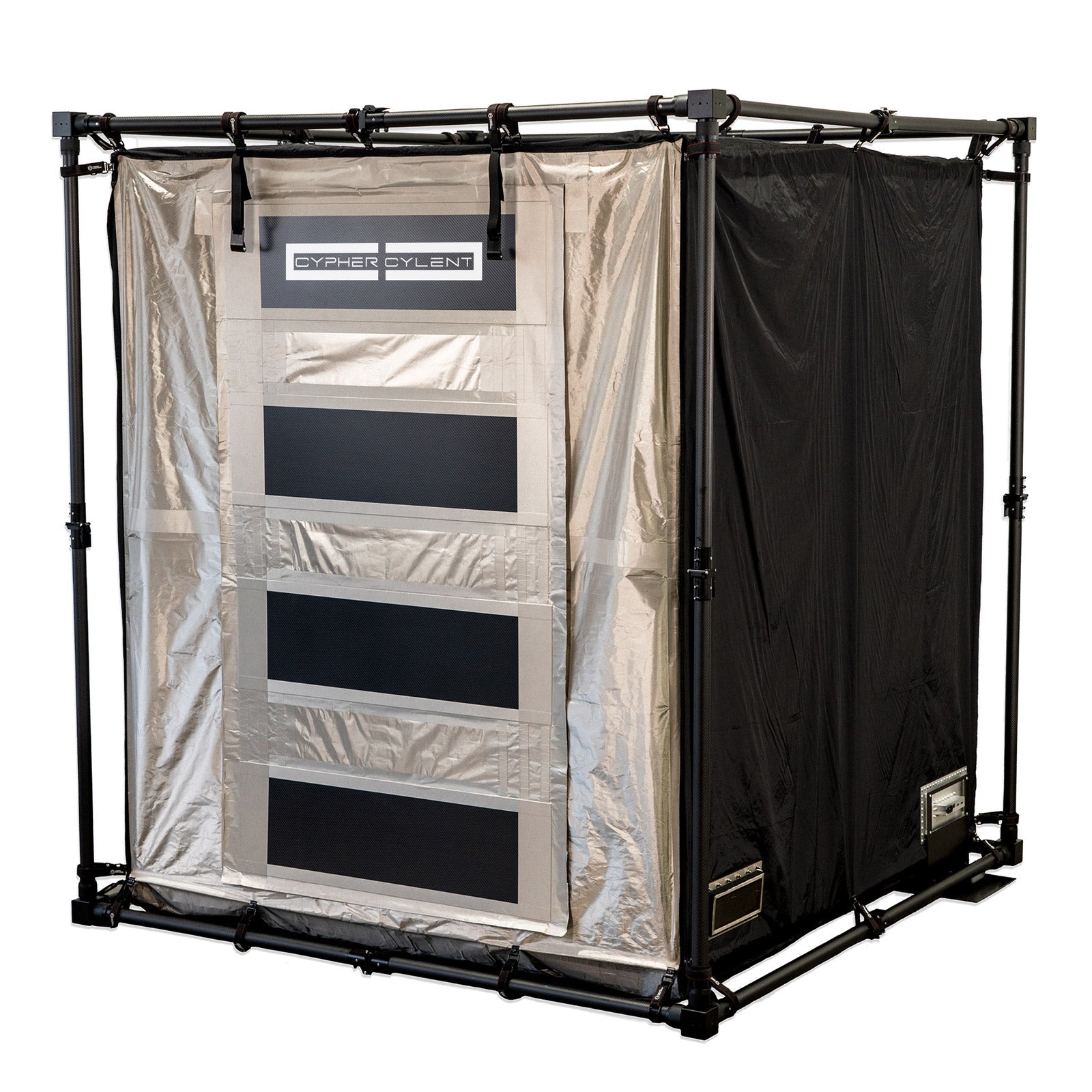
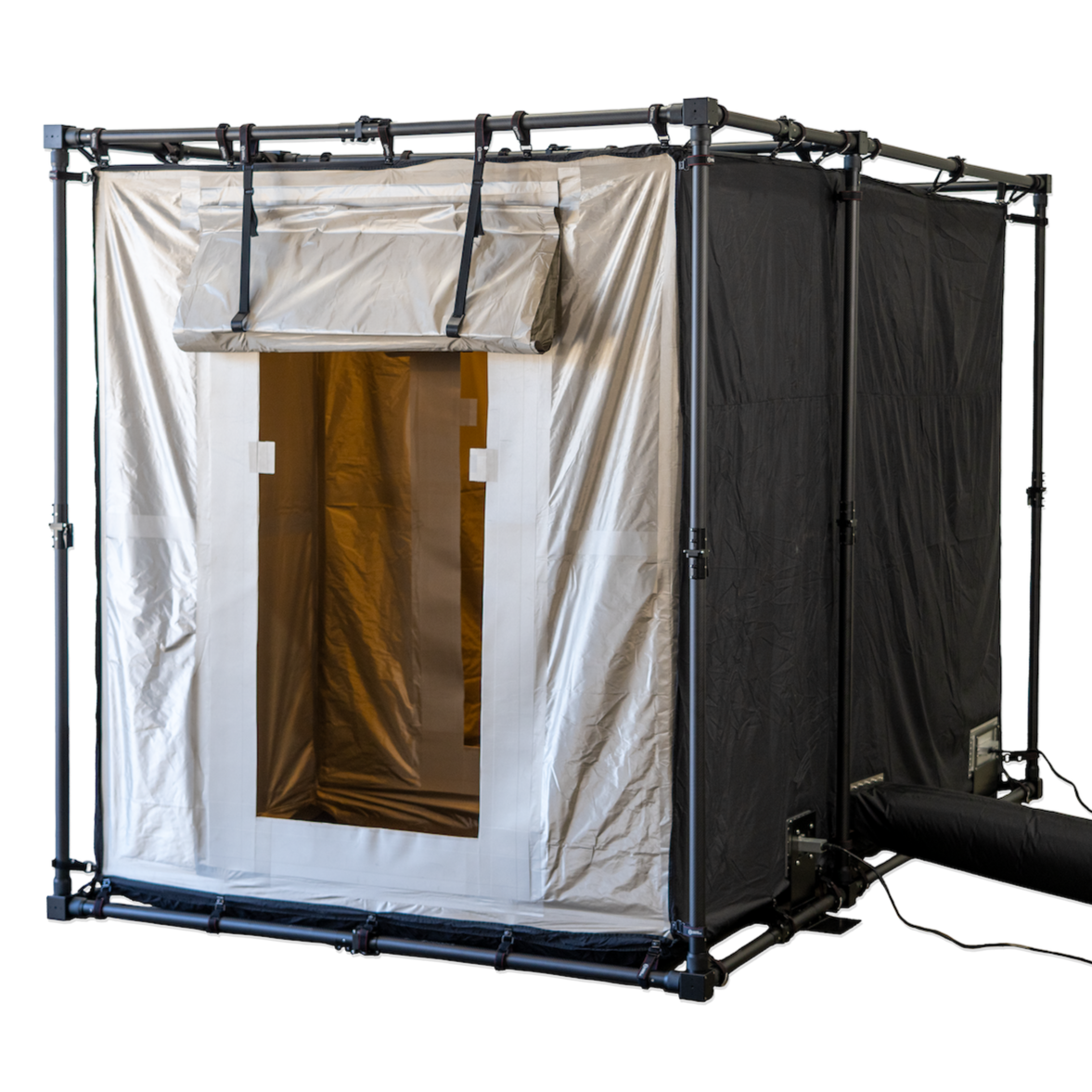
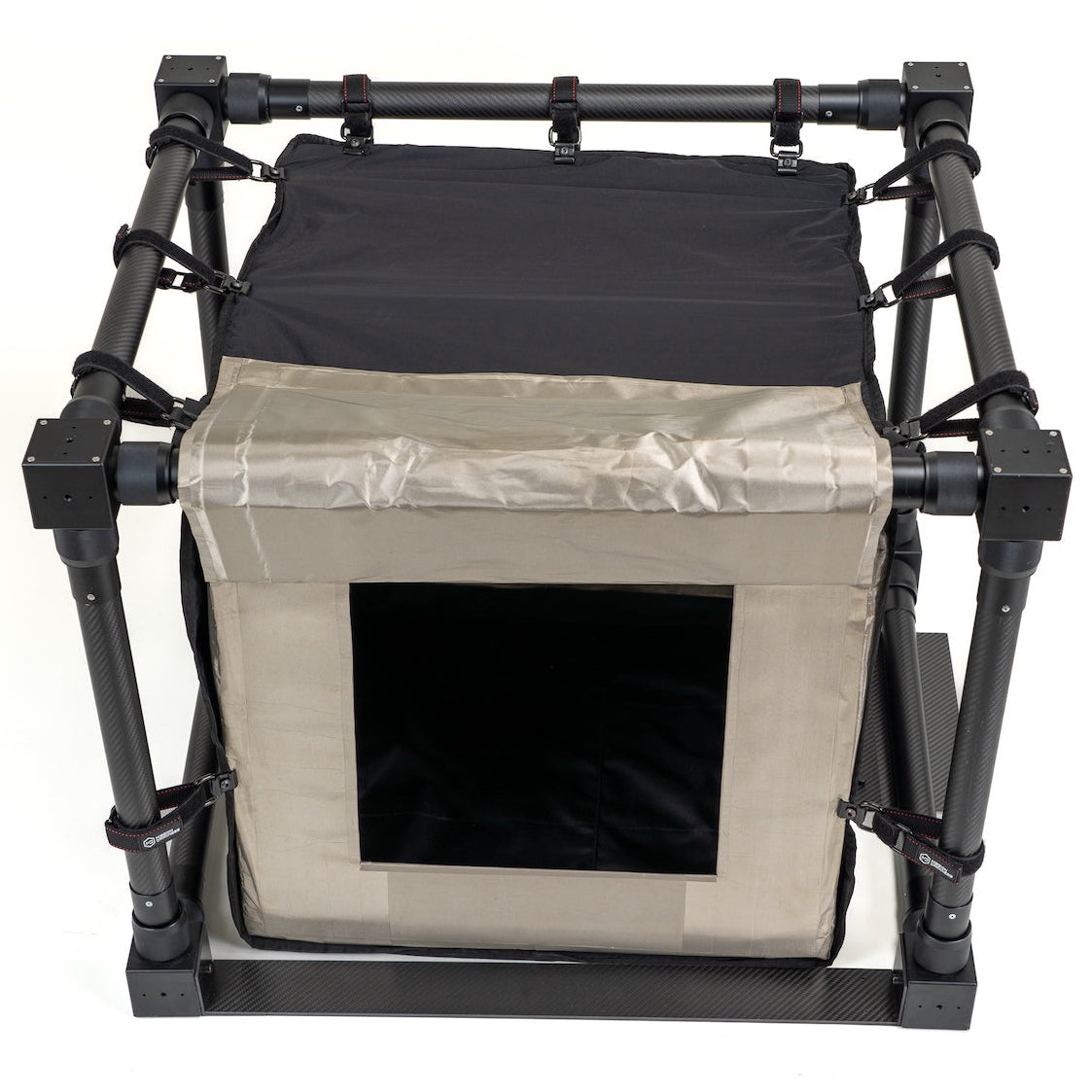
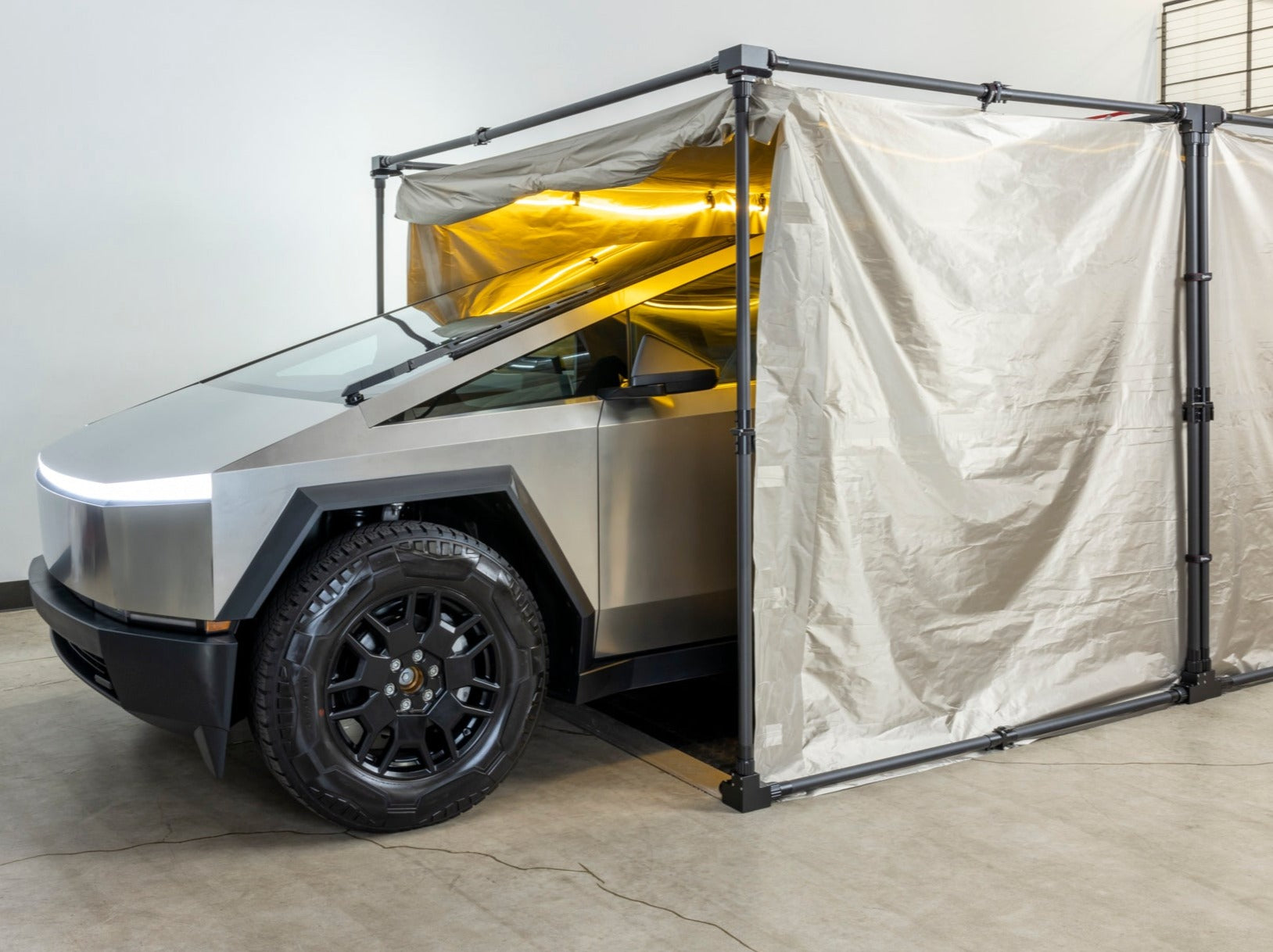
Room-scale RF isolation systems with TitanRF™ fabric, carbon fiber frames, and patent-pending magnetic door seals.
View All Tents →
Blog
News & Resources
Guides, tutorials, product deep-dives, and industry news from the Mission Darkness team.
View All Posts →
More
Company & Resources
Learn about Mission Darkness, our team, certifications, government programs, and how to work with us.
About Us →
SHIELDED
Field Guide · Digital Forensics

Shielded Room vs. Faraday Tent

Every forensics lab that handles connected devices eventually faces the same decision: build a permanent RF shielded room, or deploy a Faraday tent. Here is how the two actually compare, before you pour six figures into concrete and copper.

7 min read RF Isolation Forensics
Permanent · Built-in

Fixed Shielded Room

  • Costs from $200,000
  • Cannot be relocated
  • Months of construction
VS
Portable · Freestanding

CYPHERCYLENT Tent

  • A fraction of the cost
  • Moves with your team
  • Deploys in weeks
Same 80+ dB shielding · low MHz to 40 GHz · equal where it counts
Fixed shielded room vs. portable CYPHERCYLENT Faraday tent
The Real Question

Signal isolation is not optional. How you get there is.

For a digital forensics investigator, an uncontrolled radio signal is a threat to evidence. A seized phone that reconnects to a tower can be remotely wiped. A vehicle left online can pull an over-the-air update that overwrites its own logs. A paired device can sync fresh data straight over the top of what you are trying to preserve. The answer is a workspace where nothing gets in or out: WiFi, cellular, Bluetooth, GPS, RFID, and NFC all blocked at the wall.

Two options deliver that isolation. A fixed shielded room built into your facility, or a CYPHERCYLENT™ Faraday tent, a walk-in RF enclosure you set up where the work happens. Both can reach 80+ dB of attenuation from low MHz through 40 GHz. The shielding spec is where the similarity ends. Everything wrapped around that spec, the cost, the timeline, the risk, and whether the investment can move when your unit does, is where the two paths split apart.

Interior of a CYPHERCYLENT Faraday tent used for digital forensics signal isolation
Inside a CYPHERCYLENT Faraday Tent

Room-scale RF isolation you can stand up anywhere, without a construction permit.

The Trade-offs

Six things to weigh before you build.

Work through each of these the way you would work a chain of custody. The attenuation figure might match on paper. The rest rarely does.

01
Cost

The price of permanence

A purpose-built shielded room is a construction project, not a purchase. Depending on size, location, and specification, quotes commonly start around $200,000 and climb from there. That figure buys shielding you can never take with you.

A Faraday tent reaches comparable attenuation for a fraction of the outlay, and it is bought as portable equipment rather than a fixed leasehold improvement. The budget stays attached to your unit, not to a building you may not occupy in five years.

$200K+ Typical starting point for a permanent shielded room, before change orders. A CYPHERCYLENT tent is a fraction of it.
Fixed Shielded Room
  • Six figures, from around $200,000
  • Capital locked into the facility
  • Priced as construction, not equipment
CYPHERCYLENT Tent
  • A fraction of a fixed room's cost
  • Purchased as portable equipment
  • Budget stays with your team
02
Leak Points

Shielding is only as good as its weakest seam

Lining four walls, a ceiling, and a floor with conductive material is the easy part. The hard part is everything that penetrates them. Every door, window, power outlet, data line, and ventilation duct is a potential leak point that has to be engineered, sealed, and tested on site. One shielded door, or a vestibule airlock for a cleaner workflow? Each choice adds cost and complexity.

Then there is weight. A full shielded room adds serious structural load, so an engineer has to confirm the floor can carry it, which often forces the build to a ground floor or basement, far from where your analysts actually sit. A CYPHERCYLENT tent arrives with those problems already solved: filtered panels pass power, Ethernet, and USB through the wall without leakage, and the patent-pending RFMagLink™ magnetic door seal keeps the enclosure continuous every time someone steps through it.

RFMagLink magnetic door seal on a Mission Darkness Faraday tent
Fixed Shielded Room
  • Every penetration engineered and sealed on site
  • Structural load analysis required
  • Location dictated by the building, not the workflow
CYPHERCYLENT Tent
  • Filtered power, Ethernet, and USB penetrations built in
  • RFMagLink door seal stays continuous in use
  • Vestibule and multi-chamber options configured to order
03
Deployment

Weeks to deploy, not months to construct

Retrofitting a shielded room into an existing building is not a job measured in weeks, and it hinges entirely on a contractor getting every seam right the first time. If the finished room leaks, tracing and repairing the fault can become its own expensive project.

Mission Darkness tents are handmade in the USA and quality-controlled before they ship. Because every enclosure is built to order, exact lead times depend on the model and configuration, but they are measured in weeks rather than the months a permanent build requires. Once a tent arrives, most deploy in under 30 minutes. And if the shielding fabric is ever damaged, TitanRF™ repair patches and tape ship in the box, so a field fix does not mean a contractor callout.

Built
To Order
Assembled
In the USA
Lead Time
Weeks, Not Months
Setup Time
< 30 Min
Fixed Shielded Room
  • Months of on-site construction
  • A hidden leak means costly rework
  • One contractor, one chance to get it right
CYPHERCYLENT Tent
  • Lead times measured in weeks
  • Deploys in under 30 minutes
  • Field-repairable with included patches and tape
04
Structural Risk

Buildings shift. Shielding cracks.

The ground under your facility is never truly still. Settling, seismic activity, and thermal cycling all twist a structure over time, and that movement can open cracks in the exact surfaces a shielded room depends on. A hairline gap in a wall is cosmetic in most rooms. In a shielded room, it is a shielding failure, and one that can be maddening to locate.

Because a Faraday tent is never bonded to the building, it simply is not exposed to that risk. The shielded shell lives on its own carbon fiber frame and flexes with it, independent of whatever the structure around it decides to do.

Free-standing Mission Darkness CYPHERCYLENT Faraday tent not attached to the building structure
Fixed Shielded Room
  • Structural movement can crack the shielding
  • Failures are hard to trace and fix
  • Tied to the building's long-term fate
CYPHERCYLENT Tent
  • Not part of the structure
  • Unaffected by settling or seismic shift
  • Self-contained shielded shell on its own frame
05
Relocation

Your investment should move with your unit

Reorganizations happen. Departments grow, others shrink, teams get shuffled between floors, and every so often an entire agency relocates to a new building. A shielded room cannot follow. It stays behind for the next tenant while you budget, all over again, for a fresh build at the new site.

A CYPHERCYLENT tent disassembles and travels with the people who use it. Move it across the hall or across the state; the shielding goes where the mission goes. One investment, redeployed as many times as your operations require.

A permanent Faraday isolation room built into a digital forensics lab, which stays behind and cannot be relocated when the unit moves
Fixed Shielded Room
  • Cannot be relocated
  • Left behind when the team moves
  • A new site means a new build
CYPHERCYLENT Tent
  • Disassembles and travels
  • Redeploys in a new space
  • One investment, many locations
06
Operator Comfort

A workspace your analysts can actually stay in

A proper shielded room is sealed tight by design, and that environment is not for everyone. Shut the door and it can feel less like a workspace and more like a prison cell. This is one of the most common pieces of feedback we hear from investigators already working out of fixed rooms: they describe the confinement, and many tell us they will not stay inside more than 30 to 40 minutes at a stretch before they need to step out.

That is not a minor complaint. When the room itself pushes people out every half hour, it quietly caps how much focused analysis actually gets done in a day, and it is exactly why so many teams come to us looking for a better solution.

A Faraday tent does not have to work that way. CYPHERCYLENT tents are built for extended operations rather than short bursts: shielded ventilation and HVAC penetrations keep fresh air moving, an optional ErgoLayer™ flooring upgrade makes long sessions easier on the body, optional shielded windows preserve sightlines to the room beyond, and audio dampening liners keep sensitive work quiet. It is a workspace designed around the analyst, not just the signal.

Just as important, a tent keeps the operator connected to the team. In its standard form, without the optional dampening liner, the fabric wall is not sound-isolating, so an analyst can talk things through with colleagues standing just outside instead of being shut behind a heavy sealed door. A shielded phone wormhole can be added to any CYPHERCYLENT tent as well, a passthrough that lets a colleague hand a device in from outside without the operator leaving their seat or breaking the tent's isolation.

CYPHERCYLENT Forensic Operations Tent with shielded ventilation ducts for extended operations
Fixed Shielded Room
  • Sealed environment can feel confining
  • Sessions often cut short
  • Fixed footprint, hard to make comfortable
CYPHERCYLENT Tent
  • Shielded ventilation and HVAC options
  • ErgoLayer flooring upgrade for long sessions
  • Optional shielded windows and audio dampening
The Verdict

Same shielding. Different commitment.

Consideration
Fixed Shielded Room
CYPHERCYLENT Tent
Cost
Six figures, from around $200,000
A fraction of a fixed room
Deployment
Months of construction
Weeks of lead time, sets up in under 30 min
Leak Points
Every penetration engineered on site
Filtered panels and RFMagLink built in
Structural Risk
Cracks with building movement
Independent of the structure
Relocation
Stays behind, cannot move
Disassembles and travels
Operator Comfort
Sealed, often confining
Ventilated, floored, window options
Shielding
80+ dB, low MHz to 40 GHz
Talk to the Team

Skip the concrete. Deploy the shielding.

Tell us your workflow, your space, and the evidence types you handle. Our team, directly or through a regional partner, walks through the configuration with you before a quote ever goes out, then delivers a tested, ready-to-deploy enclosure.

Made in USA